

IoTMarketi · Guides
Continuous Water Quality Monitoring with Teltonika TRB140 Industrial IoT Gateway
Water utilities can now monitor water quality parameters continuously from remote locations using the Teltonika TRB140 industrial IoT gateway. With 4G LTE connectivity and Teltonika Remote Management System (RMS), operators detect contamination risks in real time, maintain regulatory compliance, and reduce on-site maintenance costs through secure remote device management.
Remote Water Quality Monitoring: Why Real-Time Data Matters
Traditional water quality control methods are no longer sufficient for modern utilities. When technicians collect water samples at scheduled intervals and send them to laboratories for analysis, contamination or sudden parameter changes can go undetected for hours or days. Many monitoring points — rivers, reservoirs, pumping stations, treatment facilities — are located in remote areas where wired internet infrastructure is unavailable. Frequent site visits increase operational costs, delay issue detection, and make large-scale monitoring difficult to manage efficiently.
To ensure timely responses and consistent regulatory compliance, water utilities need a reliable solution that continuously transmits sensor data from remote locations while allowing operators to monitor system performance and react immediately to abnormal readings. This need has accelerated the adoption of industrial IoT gateways and remote management systems in the water sector.
Connection Architecture with Teltonika TRB140
Water quality monitoring systems consist of measurement processing units equipped with chemical, biological, and temperature sensors. The Teltonika TRB140 industrial IoT gateway and Teltonika Remote Management System (RMS) add reliable connectivity and remote device management capabilities to this setup.

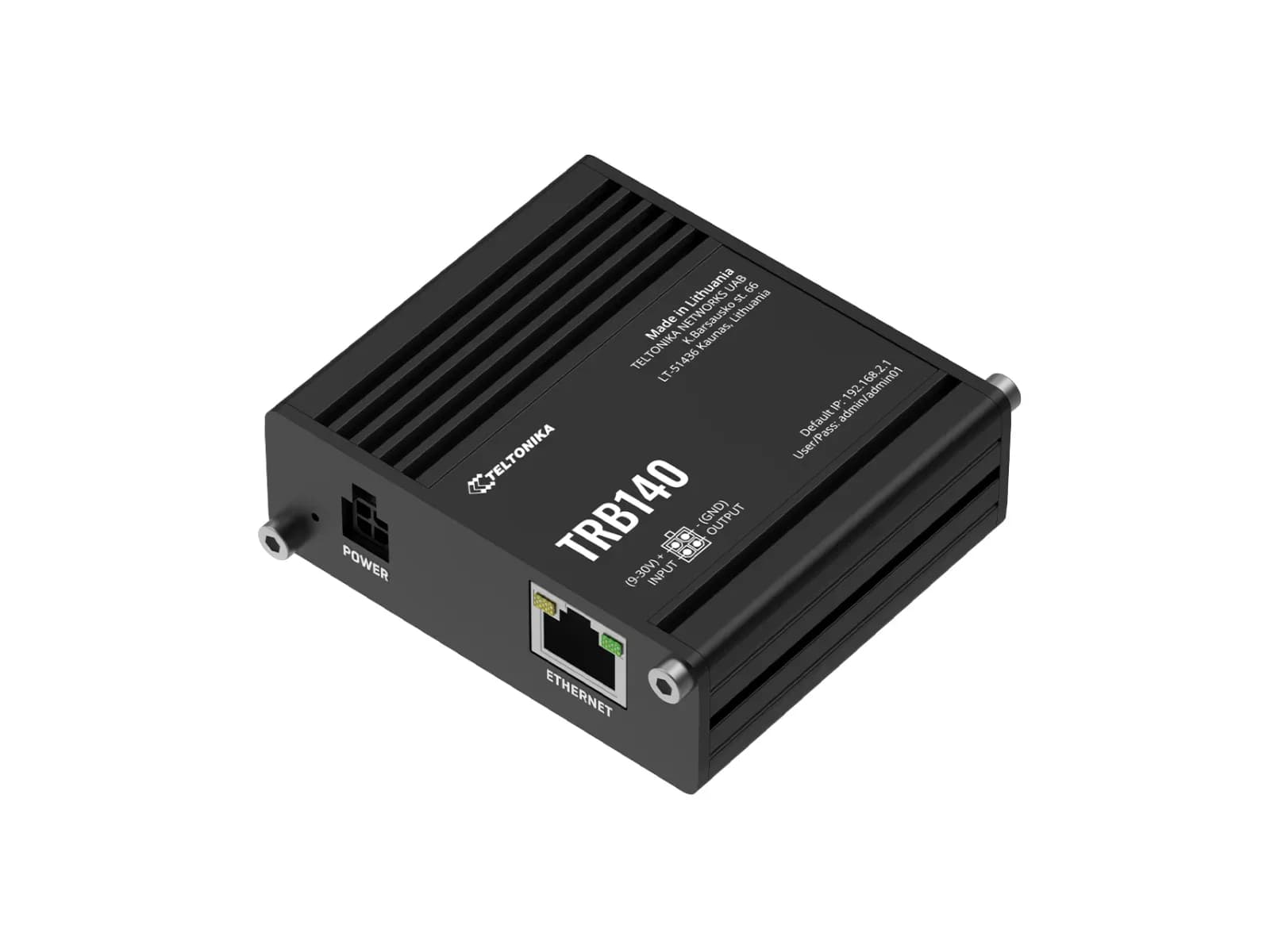
The TRB140 provides 4G LTE connectivity while also enabling wired communication via its Ethernet port with the measurement processing unit. This allows water quality data collected from chemical, biological, and temperature sensors to be continuously transmitted from remote monitoring stations to central monitoring platforms. Determining whether water from a particular source is safe to drink involves testing factors such as its chemical composition, pH level, temperature, and the presence of contaminants such as microplastics. By enabling reliable transmission of these sensor measurements, the TRB140 helps water utilities maintain visibility into water quality and respond faster to potential changes or contamination risks.
With its compact dimensions (74.5 × 25 × 64.4 mm) and industrial-grade reliability, the TRB140 is well suited for integration into environmental monitoring cabinets and other unattended installations. By providing secure and reliable connectivity, the gateway ensures that critical water quality measurements remain accessible in real time.
Teltonika RMS: Remote Management and Diagnostics
With Teltonika RMS, operators can remotely monitor device status, access gateways for diagnostics, perform configuration changes, and deploy firmware updates without traveling to the installation site. This reduces maintenance costs, minimizes downtime, and improves overall operational efficiency.
RMS provides water utilities with the following advantages:
- Centralized device management: Monitor and manage all gateways from a single dashboard
- Secure remote access: Connect to devices securely using encrypted connections
- Configuration and updates: Deploy software and settings remotely
- Performance reporting: Obtain detailed reports on connection quality, data transmission rates, and system status
Water Quality Parameters and Sensor Integration
Water quality monitoring requires measurement of various parameters:
- Chemical parameters: Chlorine, nitrate, phosphate, heavy metals
- Biological parameters: Bacterial count, coliform presence
- Physical parameters: Temperature, pH, turbidity, conductivity
The TRB140's Ethernet port connects directly to the measurement processing unit that handles these sensors. Data collected by the sensors is transmitted to central databases or cloud platforms via the device's 4G LTE module. In this architecture, the TRB140 acts as a "bridge," connecting the local sensor network to the wide area network (WAN).
Operational Benefits and Cost Savings
The combination of Teltonika TRB140 and RMS provides water utilities with tangible operational advantages:
- Rapid issue detection: Real-time data enables contamination or abnormal conditions to be detected within minutes, not hours or days.
- Regulatory compliance: Continuous monitoring and data logging make it easier to prove compliance with water quality standards.
- Reduced maintenance costs: Fewer site visits mean significant reductions in travel, fuel, and personnel expenses.
- Scalability: Managing hundreds of monitoring points from a central system is far more practical than manual management.
- Data quality: Automated sensor measurements eliminate the risk of human error.
Key Considerations When Selecting an Industrial IoT Gateway
When choosing an IoT gateway for water quality monitoring, evaluate the following features:
- Connectivity options: 4G LTE, 5G, Ethernet, serial ports
- Durability: IP67 or higher protection class, wide temperature range
- Remote management: Support for centralized management systems like RMS
- Data security: VPN, encryption, secure protocols
- Compact design: Dimensions suitable for tight spaces and cabinets
- Energy efficiency: Reliable operation in remote locations
The TRB140 meets all of these criteria as an industrial-grade solution.
IoT Transformation in the Water Sector
Water utilities worldwide are undergoing digital transformation. Smart water networks, IoT sensors, and cloud-based analytics are being used to reduce water loss, improve quality, and increase operational efficiency. Industrial IoT providers like Teltonika supply the reliable connectivity and management tools that form the backbone of this transformation.
In Turkey, water utilities face water scarcity challenges driven by increasing demand and climate change. Smart monitoring systems can contribute to more efficient use of water resources and better protection of water quality.
If you want to modernize your water quality monitoring system and learn more about industrial IoT solutions, you can request quotes from Teltonika and other industrial IoT providers through IoTMarketi. Contact us to learn about tailored solutions for water utilities in Turkey.
Hardware
Related products
Catalog hardware that fits this solution — request a quote for availability.
FAQ
Frequently Asked Questions
Teltonika TRB140 nedir?
Teltonika TRB140, 4G LTE bağlantısı ve Ethernet portu ile donatılmış endüstriyel IoT ağ geçididir. Uzak konumlardaki sensörlerden veri toplayıp merkezi sistemlere iletmek için tasarlanmıştır. Kompakt boyutu (74,5 × 25 × 64,4 mm) ve endüstriyel sınıf güvenilirliği, su kalitesi izleme gibi uygulamalar için ideal kılar.
Su kalitesi izlemede IoT ağ geçidi neden gereklidir?
Geleneksel yöntemlerle teknikler belirli aralıklarla su örnekleri toplar ve laboratuvarda analiz ettirirler. Bu, kontaminasyon veya ani değişikliklerin uzun süre fark edilmemesine neden olur. IoT ağ geçidi, sensörleri merkezi sisteme bağlayarak gerçek zamanlı veri iletimini sağlar, sorunların dakikalar içinde tespit edilmesini mümkün kılar.
Teltonika RMS nedir ve ne işe yarar?
Teltonika Remote Management System (RMS), IoT cihazlarını uzaktan yönetmek, izlemek ve güncellemek için kullanılan merkezi bir platformdur. Operatörler saha ziyareti yapmadan cihaz durumunu izleyebilir, yapılandırma değişiklikleri yapabilir ve yazılım güncellemeleri dağıtabilirler. Bu, bakım maliyetlerini ve kapalı kalma süresini önemli ölçüde azaltır.
TRB140 hangi sensörlerle uyumludur?
TRB140, Ethernet portu aracılığıyla kimyasal, biyolojik ve sıcaklık sensörleri ile donatılmış ölçüm işleme birimlerine bağlanabilir. Sensörlerin türü ve sayısı, ölçüm biriminin yeteneklerine bağlıdır. Sistem, çeşitli sensör türlerini destekleyecek şekilde yapılandırılabilir.
Türkiye'de Teltonika TRB140 için teklif nasıl alabilirim?
IoTMarketi aracılığıyla Teltonika ve diğer endüstriyel IoT sağlayıcılarından teklif talep edebilirsiniz. Web sitemizde teklif talep formunu doldurarak, Türkiye'deki yetkili distribütörlerden hızlı yanıt alabilirsiniz.
Continue reading

How to Choose a Jimi IoT GPS Vehicle Tracker: Fleet Guide
Jimi IoT GPS trackers and dash cams: OBD vs wired, single vs multi-channel AI. Model selection by fleet size and how to get a quote.

LoRaWAN and BACnet Integration: Connecting Wireless IoT Sensors to Smart Building Management Systems
LoRaWAN technology enables wireless sensors to integrate seamlessly with existing BACnet-based Building Management Systems (BMS) without expensive rewiring. This guide explores hybrid architecture, protocol conversion, and gateway workflows—a cost-effective, rapid solution for modernizing legacy buildings.

Fleet Tracking and Fuel Management: Optimizing Logistics Fleets with Jimi IoT VL502
For logistics and delivery operations, vehicle tracking, fuel management, and maintenance planning are critical. OBD tracking devices like the Jimi IoT VL502 collect real-time vehicle data, increasing operational efficiency, preventing unexpected breakdowns, and reducing operating costs. Discover suitable solutions for Turkey's logistics sector.