

IoTMarketi · Guides
Secure and Reliable Internet Connectivity for Hotel Guests
Free Wi-Fi access is now a deciding factor for hotel guests. Enterprise-grade networking devices with remote management capabilities enable multi-floor hotels to deliver high-speed, secure, and scalable connectivity across all guest areas.
Guest Satisfaction and the Role of Internet Connectivity
Modern hotel management is no longer limited to room comfort and service quality alone. Research shows that 75% of over 500 respondents consider free internet access a critical factor in their hotel selection decisions. Wi-Fi access now ranks alongside traditional amenities like breakfast and free parking as a top priority for guests.
Globally, there are more than 3.8 billion smartphone users, and this number is growing rapidly. Combined with smartwatches, tablets, and laptops, guests expect internet access everywhere—as essential as air and water. However, meeting this expectation is far from simple for hotel managers.

Connectivity Challenges Hotels Face
Providing quality free Wi-Fi is only part of the connectivity puzzle. The real question is: how reliable and secure is the connection? Poor browsing experiences lead to lost repeat business and negative online reviews—which are crucial in the hospitality industry. The problem is that hotel infrastructure often doesn't grow as fast as technology does. Solutions that worked perfectly a few years ago are now insufficient due to the increasing number of smart devices guests carry and use daily. Moreover, while some guests may be streaming video or downloading files, others need a stable connection for business calls or emails. It's vital to ensure these different needs don't interfere and that there are enough resources to satisfy all guests, regardless of how they use the internet.
System Architecture: Multi-Floor Hotel Network Design
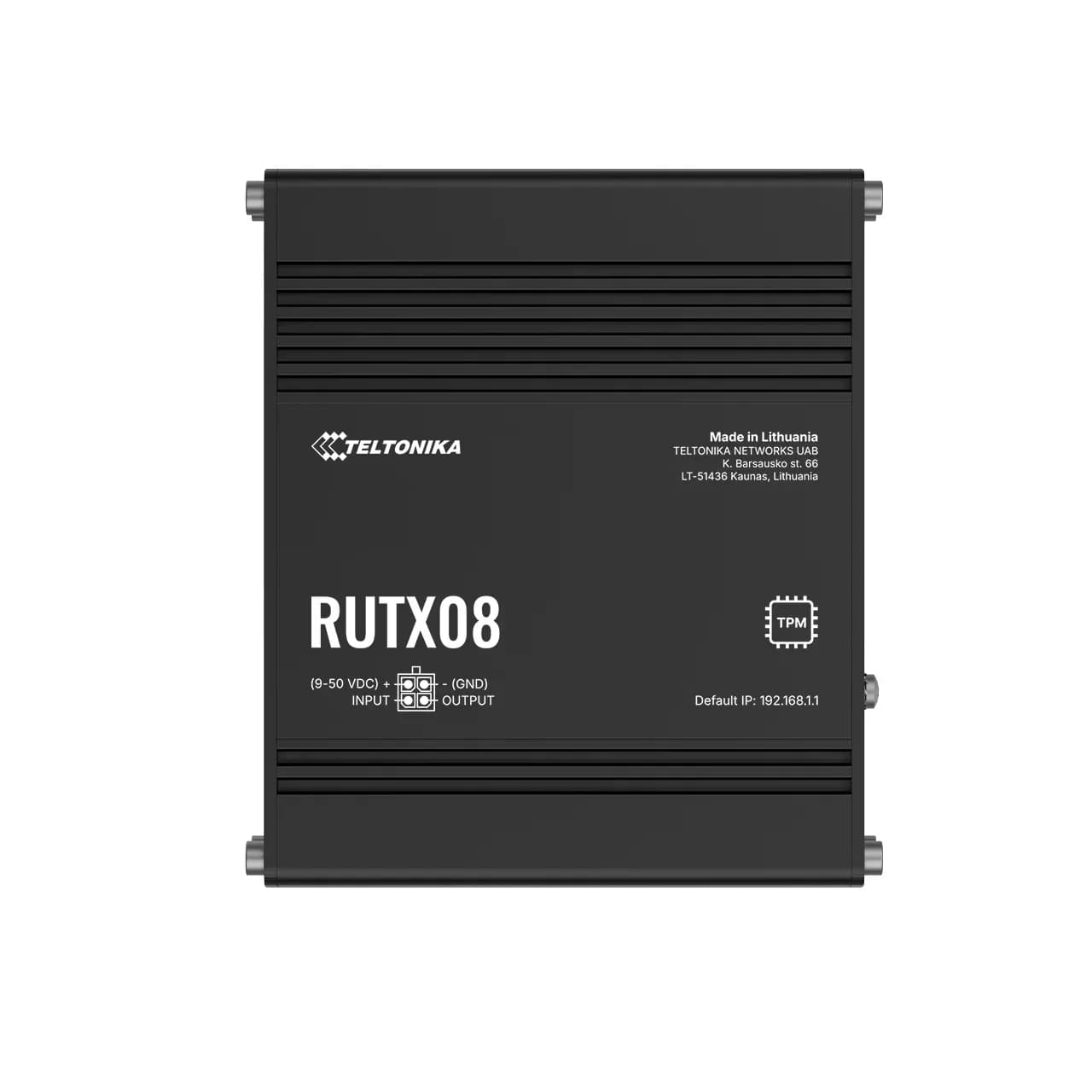
A reliable and high-performance hotel network requires a layered infrastructure. In a typical solution, a main Gigabit Ethernet router (such as RUTX08) connects the entire infrastructure to the internet. Connectivity is distributed across multiple floors using industrial-grade Gigabit switches (TSW110). Each floor is served by wireless routers (RUTX10) equipped with Wi-Fi 5 (802.11ac) Dual Band capability. These routers can operate in Access Point and Station Mode simultaneously, enabling continuous stable Wi-Fi coverage with fewer cables.
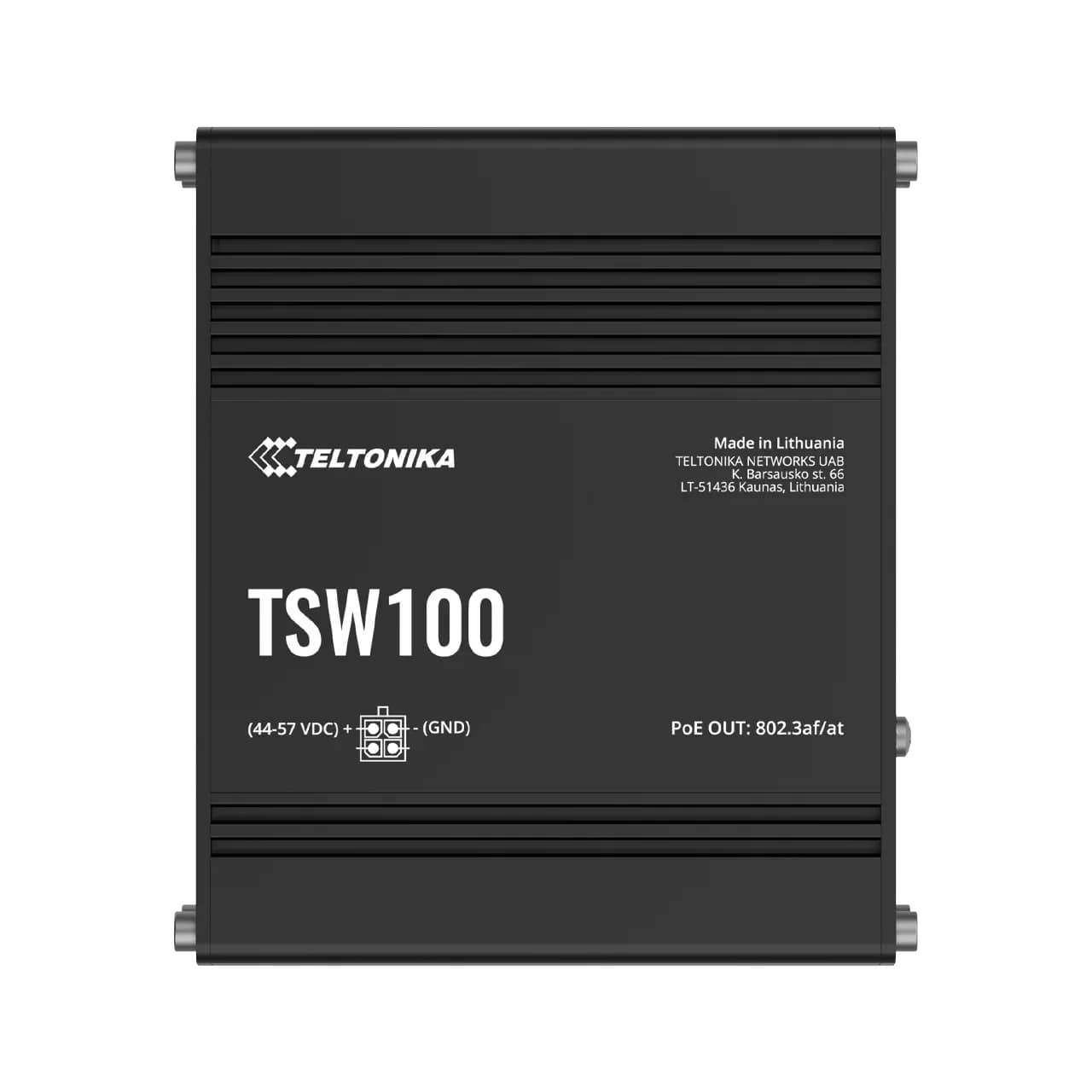
On the ground floor, a PoE-enabled switch (TSW100) provides IP cameras, IP phones, and payment systems with data and power over a single Ethernet cable. This makes deployment simple, fast, and cost-effective.

Security and Data Throughput
Industrial-grade network devices address two critical requirements in hotel networks: high data transmission speed and security. Gigabit Ethernet and Wave-2 802.11ac Dual Band Wi-Fi enable guests to run bandwidth-intensive applications seamlessly.
From a security perspective, firewalls and multiple VPN services (OpenVPN, IPsec, PPTP, L2TP, and DMVPN) protect guest data. This is especially critical for business travelers.
Remote Management: Scalability and Efficiency
Periodic updates and maintenance of hotel networks become far more efficient with centralized management systems. A Remote Management System (RMS) allows hotel IT operators to access and manage the entire network from anywhere in the world. Settings, passwords, and device firmware can be updated remotely; full desktop access to all hotel management computers is available for comprehensive IT support.
This is particularly advantageous for hotel chains. The time and cost required to resolve technical issues are significantly reduced. Additionally, similar solutions can be adapted with minor modifications to hotels of varying sizes, locations, and occupancy rates.
Why Industrial-Grade Network Solutions Matter
In hotel networks, reliability and security directly impact the quality of service delivered to guests. Industrial-grade network devices place special emphasis on these two factors. Product compatibility ensures simple and fast deployment. PoE functionality powers devices like cameras and phones, reducing the number of cables needed.
Scalability enables solutions to be adapted to hotels of different sizes. Remote management reduces maintenance costs and improves operational efficiency.
Frequently Asked Questions
Why is Wi-Fi connectivity so important for hotel guests? Research shows that 75% of guests consider free internet access a critical factor in hotel selection. Poor internet experiences lead to negative online reviews and customer loss.
How is consistent Wi-Fi signal maintained across multiple floors? Two wireless routers on each floor operating in Access Point and Station Mode simultaneously create continuous stable coverage with fewer cables. Industrial switches manage data distribution between floors.
How is security ensured in hotel networks? Firewalls and multiple VPN services (OpenVPN, IPsec, PPTP, L2TP, DMVPN) protect guest data. This is especially important for business travelers.
What advantages does a remote management system provide? Remote management allows IT operators to perform network updates and maintenance from anywhere in the world. This significantly reduces costs and problem-resolution time, especially for hotel chains.
Can similar solutions be applied to different types of hotels? Yes, industrial-grade network solutions can be adapted with minor modifications to hotels of varying sizes, locations, and occupancy rates.
Providing secure and reliable internet connectivity to hotel guests is now a fundamental component of modern hospitality operations. With industrial-grade network devices and remote management systems, this goal can be achieved cost-effectively and efficiently. If you're looking for suitable IoT and networking solutions for Turkish hotel properties, you can request a quote from IoTMarketi — expect a response within 24 hours.
Hardware
Related products
Catalog hardware that fits this solution — request a quote for availability.
 TeltonikaWired Connectivity
TSW100
Teltonika TSW100 is an unmanaged PoE+ Gigabit Ethernet switch for industrial networks, centralizing power delivery with 5 ports and 120 W budget. DIN rail mounting, compact design. Request a project quote via IoTMarketi in Turkey.
Inquire
 TeltonikaGateway & Router
RUTX08 Gigabit Ethernet Router
Robust industrial Gigabit Ethernet router with 4 ports, Quad-Core CPU, VPN, MQTT/Modbus support, and RMS compatibility. Request a quote for your Turkey-based IoT infrastructure projects.
Inquire
FAQ
Frequently Asked Questions
Otel misafirleri için Wi-Fi bağlantısı neden bu kadar önemli?
Araştırmalar, misafirlerin %75'inin otel seçiminde ücretsiz internet erişimini çok önemli bir faktör olarak gördüğünü göstermektedir. Tatmin edici olmayan internet deneyimi, olumsuz çevrimiçi yorumlara ve müşteri kaybına yol açabilir.
Çok katlı otellerde nasıl tutarlı Wi-Fi sinyali sağlanır?
Her katta iki kablosuz yönlendiricinin Access Point ve Station Mode'unda aynı anda çalışması, daha az kablo gereksinimiyle sürekli stabil bir ağ oluşturur. Endüstriyel anahtarlar, katlar arasında veri dağıtımını yönetir.
Otel ağlarında güvenlik nasıl sağlanır?
Güvenlik duvarı ve çoklu VPN hizmetleri (OpenVPN, IPsec, PPTP, L2TP, DMVPN), misafirlerin verilerini korur. Bu, iş amaçlı seyahat eden konuklar için özellikle önemlidir.
Uzaktan yönetim sistemi hangi avantajları sunar?
Uzaktan yönetim, IT operatörleri tarafından dünyanın herhangi bir yerinden ağ güncellemelerinin ve bakımının yapılmasını sağlar. Bu, otel zincirlerinde maliyetleri ve sorun çözme süresini önemli ölçüde azaltır.
Benzer çözümler başka otel türlerine uygulanabilir mi?
Evet, endüstriyel ağ çözümleri boyut, konum ve işgal oranı farklı olan çoğu otel işletmesinde küçük değişikliklerle uygulanabilir.
Continue reading
Milesight WT102 Smart Radiator Thermostat Reliability: Technical Q&A
How does the Milesight WT102 smart radiator thermostat operate continuously without batteries? Discover the engineering behind industrial-grade reliability: thermoelectric energy harvesting, supercapacitor buffering, and local autonomous control that keeps your HVAC running—no maintenance, no manual resets.
LoRaWAN Hotel HVAC Reliability: 100 Rooms, 200,000 Tests, 99.26% Success
Milesight validated LoRaWAN-based HVAC control across 100 hotel rooms in a rigorous 135-hour stress test, achieving a 99.26% link success rate over 202,111 communication cycles. This large-scale reliability benchmark demonstrates LoRaWAN's readiness for industrial IoT deployments in hospitality and beyond.

Milesight EV Charging Station Management: The Path to Carbon Neutrality
Electric vehicles are the foundation of carbon neutrality. Milesight's industrial IoT solution enables remote management of decentralized charging stations, improving energy efficiency, reducing maintenance costs, and lowering carbon emissions. How do LoRaWAN and 4G/3G-connected smart gateways work for Turkey's rapidly expanding EV infrastructure?